



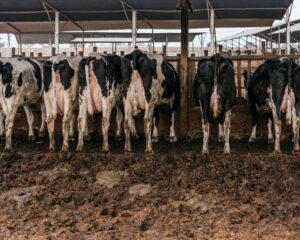


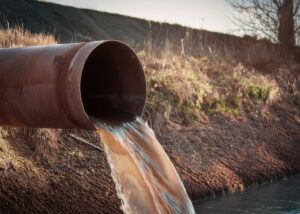


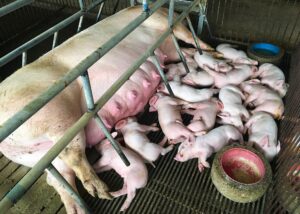

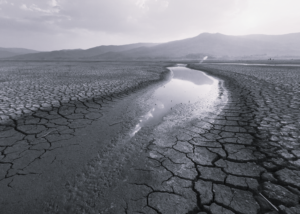




It’s well past time to face up to the widespread impacts of factory farm manure. The volume of waste generated by billions of confined animals is not just an unpleasant byproduct of industrial agriculture — it is a major environmental and public health threat.
While headlines may focus on PFAS or microplastics, this more potent pollutant continues to escape national scrutiny. Produced in unfathomable quantities, the embedded nutrients – nitrogen and phosphorus – severely contaminate waterways and degrade air quality.
Regulators and government agencies have long understood the scale of the problem. Yet instead of confronting it, they minimize and obscure the consequences of industrial animal waste. Along with nutrient pollution from chemical fertilizers, much of it on feed crops, manure pollution hides behind the screen of “small family farms” and agricultural exceptionalism.
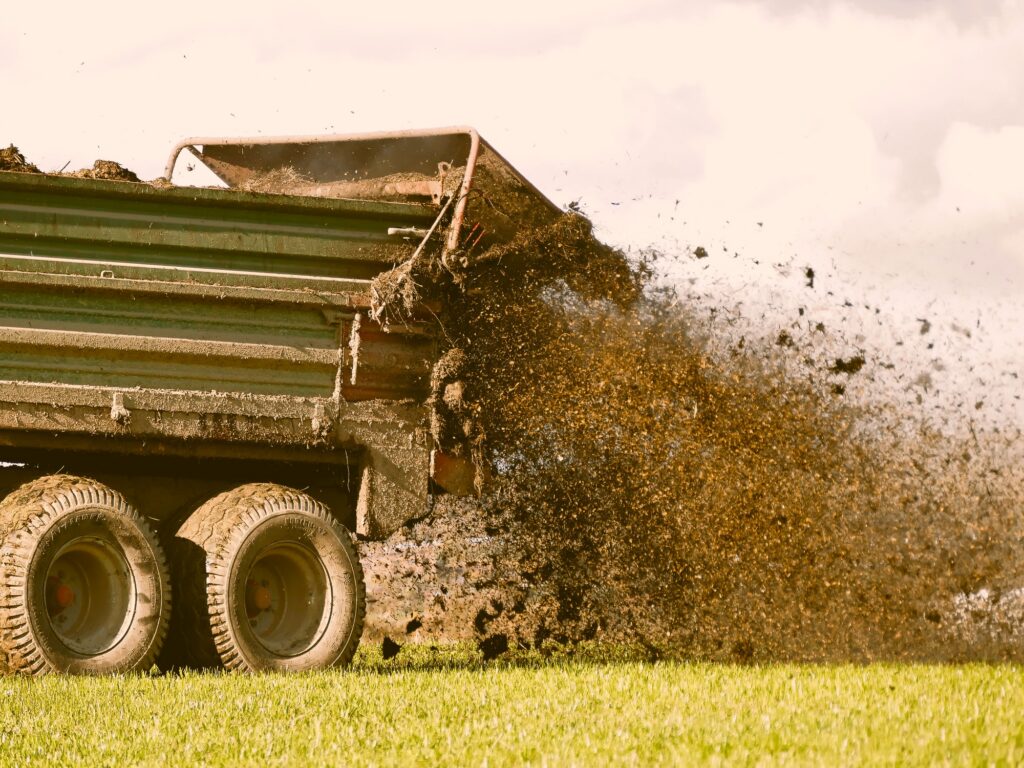
The yearly volume of U.S. factory farm manure would fill about 25 million oversized 30-ton manure spreaders. If the spreaders were laid out end to end, they’d reach from New York to Los Angeles and back again – about 35 times over. These volumes are almost completely useless to crop farmers, expensive to transport and ineffective compared to chemical fertilizers. Like most industries, animal ag will only handle waste products with care if forced to. Unlike most industries, this waste product is generated in more than a hundred thousand locations across the country. The government’s failure to address the resulting pollution is a profound dereliction of duty.
In years past, federal agencies had plans for mitigating the damages. In 1999, the USDA and EPA issued a joint strategy to “Minimize water quality and public health impacts from AFOs.” They even wrote transparent sentences like, “Improperly managed manure has caused serious acute and chronic water quality problems throughout the United States.”
Now, after decades of severe manure pollution and the accompanying failing grades for lakes, rivers, wetlands, and coastal zones, federal agencies obscure the facts, while placing the onus on the states. Agencies typically say that the nutrients in manure “can” impair air and water quality – implying that maybe they do and maybe they don’t. In a recent report about nutrient pollution in the Gulf of Mexico, the EPA mentioned manure a mere four times in 150 pages, despite an earlier USGS determination that manure was the single largest contributor of nitrogen to the Gulf – making it the primary driver of the 4,400 square mile dead zone.
Our analysis of nutrients lost to the environment
 Although the USDA and EPA make little effort to assess the shares of manure nutrients lost to the environment, they do offer some data on which estimates can be based. Using their reports we very broadly estimate that about 80-90% of the nutrients in factory farm manure become pollutants.
Perhaps 10% of nitrogen and 20% of phosphorus is effectively applied to cropland (incorporated into the soil and available for crops). Some USDA info on which we base that estimate:
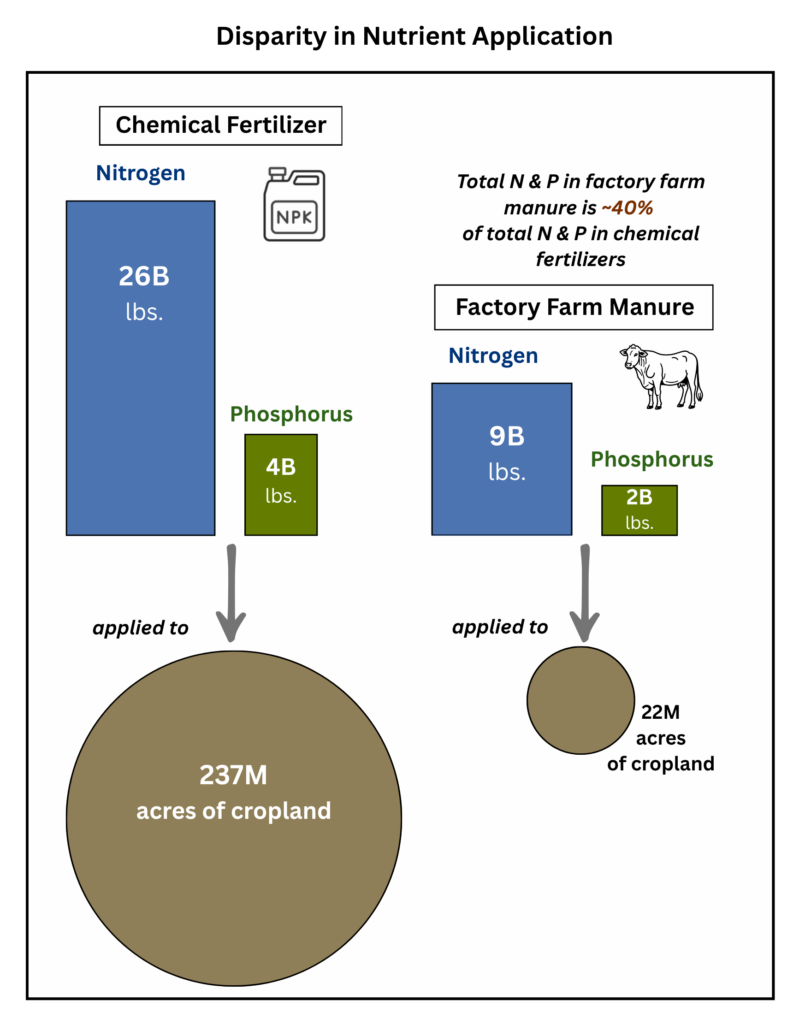
 Manure from factory farms is applied to only 22 million acres of cropland, while chemical fertilizers are applied to 238 million acres. In other words, about 40% of the original nutrient volumes are applied to less than 10% of the cropland. This is the first giveaway that the nutrients in manure have either escaped or are not valued.
Almost 80% of manure is spread on crops owned or controlled by factory farm operators. They need that land as a place to get rid of a waste product.
More than half of farmers make no reduction in chemical fertilizer applications when they apply manure to cropland. Nutrient applications beyond crop needs become pollutants.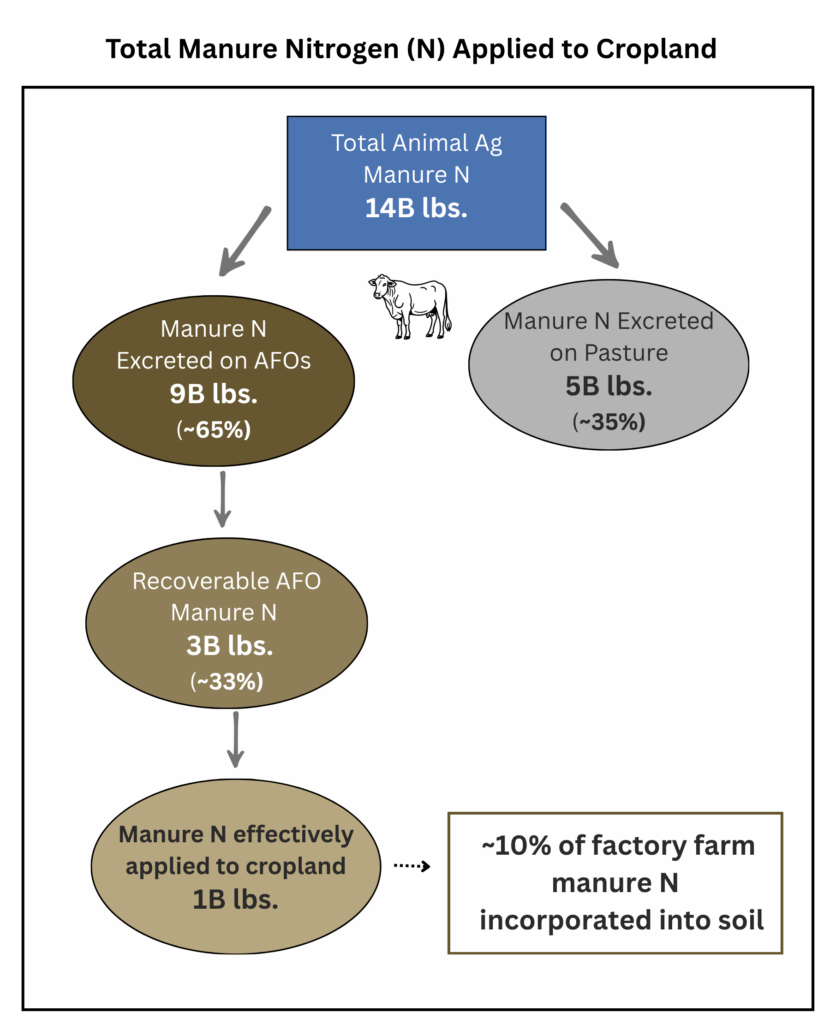
Of total factory farm nitrogen volumes, about 15-25% is applied to cropland. The rest has already escaped.
Of the manure applied, the great majority is surface applied, of which less than 30% is typically incorporated into the soil.
Why does this matter?
Excess manure nutrients are a central driver of the pollution of U.S. waterways. They cause an alarming loss of biodiversity, especially for aquatic species. They contaminate rural drinking water. The dispersal of manure spreads additional contaminants including pathogens, heavy metals, antimicrobials, and hormones. Excess manure nitrogen creates air pollution that causes thousands of human deaths each year. Globally, factory farm manure is central to the transgression of planetary boundaries for nitrogen and phosphorus, threatening human and planetary health.
No other industry would be allowed to cause this level of damage. Transparency would at least allow consumers to vote for new policies or vote with their dollars for a cleaner environment. Acknowledging the true costs is a necessary starting point for change.