







Along with 42 million other Americans, our household sources drinking water from groundwater via a private well. Last month, after spending a couple of weeks researching and writing about nitrates in our nation’s drinking water, we woke one morning to the strange smell of something noxious in our own water. The next couple of weeks were marked by research, tests, and hauling jugs of water. And much anxiety.
The experience seemed like a providential lesson in empathy. While we were able to resolve the situation, some homeowners with private wells don’t know if their water is contaminated and don’t have the time or resources to find out. Our unwelcome health journey was not a result of animal agriculture. But for many Americans, it is. That fact is often obscured.
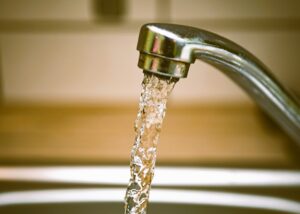
The EPA places an upper limit on nitrates in drinking water and regulates those levels in community water supplies. Private well owners are on their own, however, and many do not know that their water is contaminated because they don’t test their wells for long periods. Small community suppliers with limited resources also exceed the limits with some regularity. Nitrate levels can rise and fall depending on the season, rainfall, and farm and CAFO activities. Nitrates are colorless, odorless, and tasteless. So, unless your water is regularly tested, you won’t know if it’s contaminated. Remediation is expensive.
Nitrate contamination in drinking water – a result of nutrient pollution – is one of many negative externalities of industrial animal ag. It’s a transfer of costs from the producers and consumers of animal-sourced foods to a smaller group of unsuspecting third parties, many of whom feel the weight of sickness and loss.
Evidence of blue baby syndrome informed the EPA limit more than 50 years ago. But since then, many studies have connected nitrate levels even far below EPA limits with birth defects, low birth weights, and various cancers. An EPA review of nitrates was initiated almost 10 years ago, then suspended, then “unsuspended,” and is currently in limbo with no indication of a pending assessment schedule.
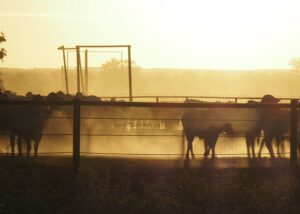
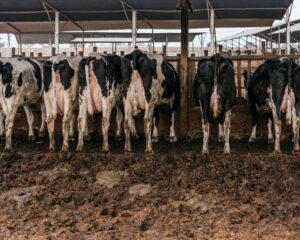
Federal agencies regularly acknowledge that the main sources of nitrates (a nitrogen compound) are “agricultural.” But it is animal agriculture that is the real culprit. According to our best estimates just under half of the nitrogen pollutants escaping into the environment are from animal ag. The main sources are excess fertilizers applied to monoculture feed crops and the nutrients in vast amounts of concentrated manure that factory farms disperse into the environment in multiple ways.
The high nitrogen content in manure and chemical fertilizers has an unusual ability to escape into the environment, transforming into various damaging compounds that cycle from air to water to land and water again. Nitrogen from manure leaches into water directly from factory farm storage systems and from spraying on nearby land. Nationally, about half of the nitrogen in chemical fertilizer is used on corn and soybeans – the primary feed crops.
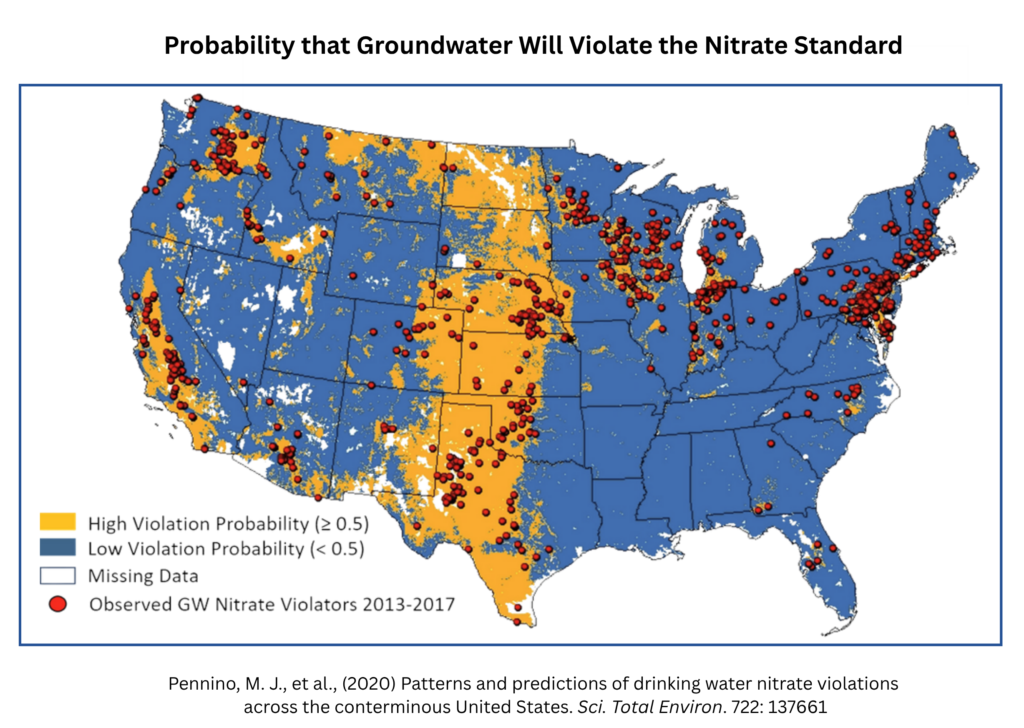 Weak regulations and conservation incentives for farmers have been wholly insufficient to address nutrient pollution, as even USDA researchers occasionally acknowledge. One of the many damaging results is that 1.4 million Americans consume water that exceeds the EPA’s maximum nitrate limit, and millions more drink water that exceeds half the limit, for which there is evidence suggesting significant health risks. Many live with the question of whether their water might be putting them at risk of cancer, or if their unborn babies might have birth defects. Rural homeowners especially live with the stress of wondering if it’s time to get the water tested again after the rainy season or the local CAFO’s heavy spraying.
Consumers and non-profits in several states have recently been in the news for pushing back on consistently high levels of nitrates, including in Iowa, Nebraska, and Wisconsin. Unsurprisingly, these are states where factory farms are concentrated. State regulations to date have been weak, focused on voluntary conservation efforts, or offering incentives to well owners for testing and mitigation.
Does it have to be this way? So far, the deal is holding: hardship for the few traded for cheap meat for the many. But awareness is spreading, and the calls for action seem to grow louder. As we learned recently in our own home, feeling like the few, even for a short time, is an eye opener.