





The air quality impacts of factory farms are underestimated, unregulated, and largely invisible to the American public. Greenhouse gas emissions receive some attention, while other air pollutants that directly harm human health and the environment are mostly ignored. Of the many gas emissions from industrial animal ag, ammonia is the central pollutant, the largest in volume, and the most damaging.
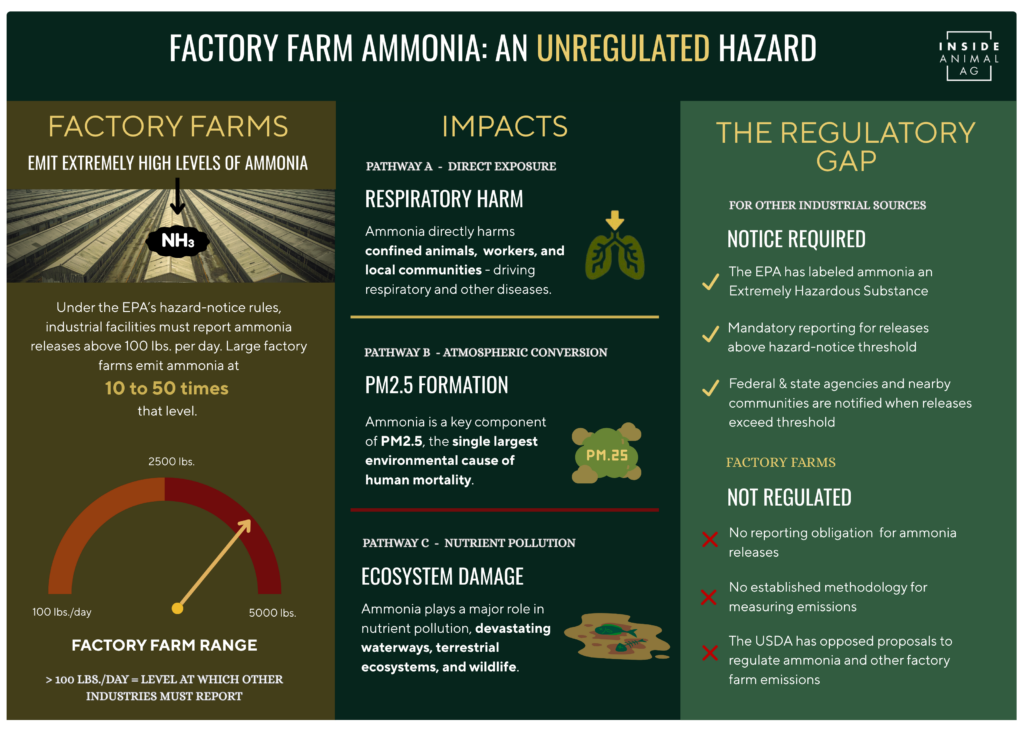
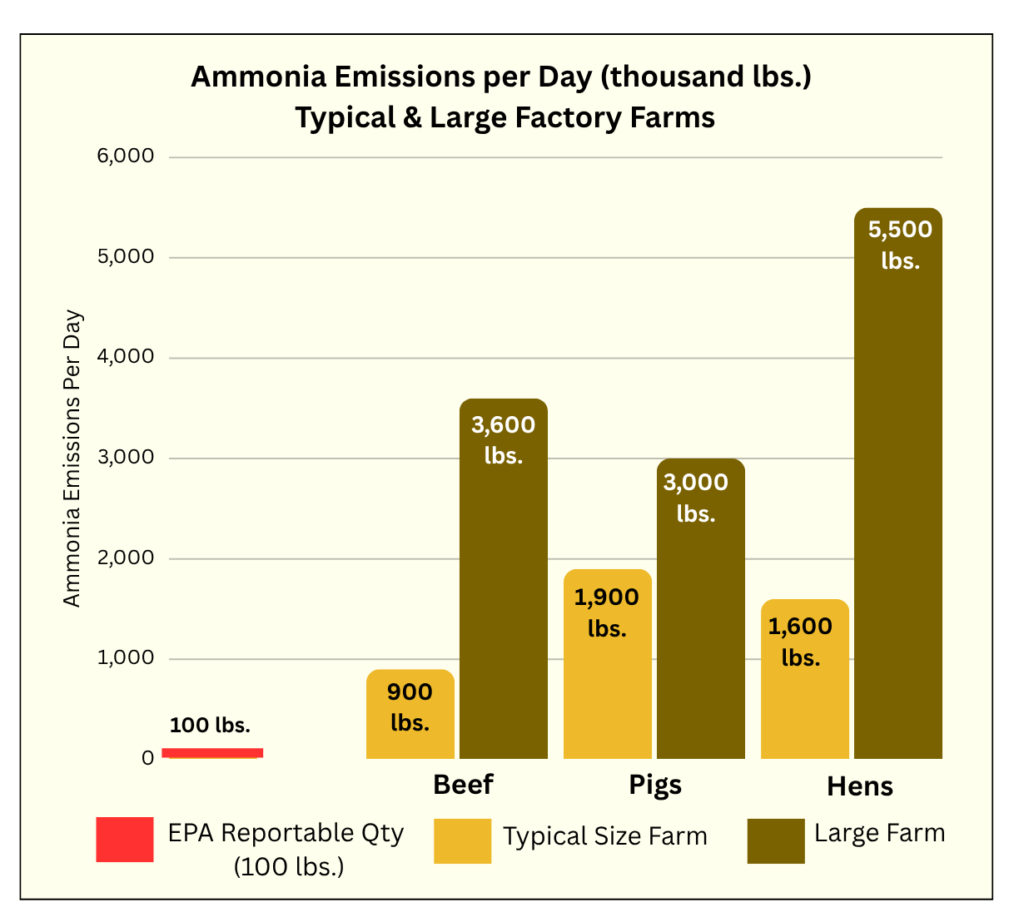 The EPA regards ammonia as an “extremely hazardous substance.” Releases above 100 pounds a day require notification to federal and local response centers to protect the public. Ammonia is regularly emitted by factory farms at 1,000 or even 5,000 pounds per day. Factory farms are exempt from all reporting requirements.
The Damages
Ammonia creates harms on several levels.
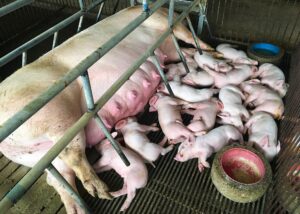
 Locally – On factory farms, ammonia causes respiratory issues for farmed animals and workers, and it is a factor in the health problems and life-changing odors for residents living nearby.
Regionally – Ammonia is a major component in the formation of PM2.5, the largest environmental health risk to humans. More than 10,000 Americans die each year from animal ag air pollution, primarily due to ammonia emitted from manure and feed crop fertilizers transforming into PM2.5.
Nationally – Ammonia emissions (a nitrogen-based gas) play a major role in nutrient pollution. The emissions don’t stay in the air but transform into compounds that return to land and water as part of the “nitrogen cascade,” adding to the eutrophication of waterways and damaging terrestrial plant and animal life.
Every aspect of environmental degradation is worsened by ammonia’s contributions to nutrient pollution, including the pollution of waterways, forest degradation, spread of invasive species, nitrates in drinking water, and biodiversity loss. Of the proposed 9 planetary boundaries that define a safe operating space for humanity, nitrogen pollution, of which ammonia is a key component, has most definitively entered the “high-risk” zone, thereby threatening human and planetary health.
Lack of Federal Oversight
Animal ag air pollution is exempt from federal regulations for a host of reasons – or excuses. After many years of regulatory delay and inaction, Congress passed the Farm Act in 2018 to definitively exempt factory farms from EPA air regulations. The USDA had previously thrown its weight behind animal ag’s freedom to generate ammonia – a clue that restrictions on factory farm air pollutants could strike at the economic heart of the industrial animal ag system.
Indeed, it could be argued that the federal government systematically obscures the impacts of animal ag’s ammonia pollution and, more broadly, nutrient pollution. The tacit tradeoff: environmental degradation and human health risks in exchange for cheap meat and dairy.
Education
In 2011, an advisory board to the EPA on nutrient pollution went on record to state, “Until there is general recognition that there is a problem and we need to deal with the negative externalities of excess reactive nitrogen in our environment, there will be no willingness to tackle this issue. Education, communication and outreach are critically important to engender in the public sufficient will to tackle this widespread problem.”
We couldn’t agree more. Thankfully, environmental groups have petitioned the EPA on factory farm air regulations over and over and over. And many Americans are beginning to challenge pesticides in food, nitrates in water, and other sources of pollution. There is a will to hold our government agencies accountable. But education and communication are lacking. Continuing pressure from a broad coalition could help force a change to saner, healthier, and more ethical practices.