



In February, Donald Trump signed an executive order classifying glyphosate-based herbicides as “crucial to the national security and defense” of Americans. The human health impacts of glyphosate and other pesticides deserve attention. But the claim that glyphosate is crucial to U.S. agricultural productivity and food security is a smokescreen. We offer a few facts to clear the air.
Glyphosate for feed crops
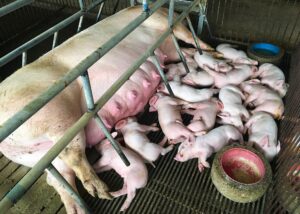
The primary use of glyphosate is for crops fed to animals on factory farms. A large share of that feed goes to farmed animals in foreign countries.
The last official estimate from USGS in 2019 shows that ~70% of total glyphosate usage was for corn and soybeans. That figure rises to almost 80% when including usage on hay & pasture. Corn and soybeans are the two largest U.S. crops by acreage; both are mostly used for animal feed. Hay is the third largest, used entirely for animal feed. (While these figures are from 2019, recent USDA estimates confirm that the shares of glyphosate going to corn, soybeans, and hay have remained relatively constant.)
About 64% of U.S. corn production is used for feed, including exports, corn silage, and dried distiller grains (a by-product of ethanol). Less than 10% of corn is used for human food, with high-fructose corn syrup the largest food use.
About 58% of U.S. soybean production (by value) goes to animal feed. If tracking by weight of product, about 75% goes to animal feed. The single largest use is for exports that feed factory farmed animals in other countries.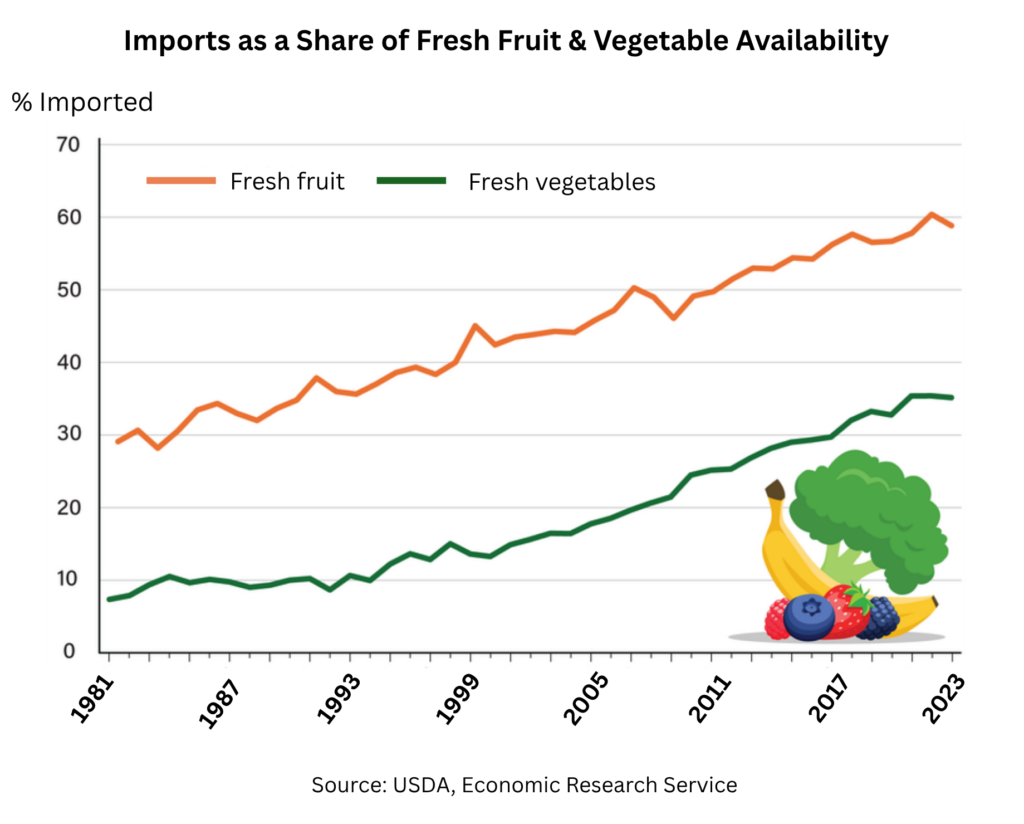
Meanwhile, we import more than a third of our vegetables and more than half of our fruit. The true national security concern is that the government encourages farmers to grow cheap monoculture feed crops in some of the most fertile soil on earth instead of growing healthy food for humans.
The economics of corn and soybeans
The total contribution of corn and soybeans is a rounding error in our economy. They are commodity crops available on international markets at comparable and competitive costs around the world, offering remarkably low returns per acre. The National Corn Growers Association estimated that in 2024, corn farming contributed ~$16 billion to GDP, or about 0.05% of that year’s total U.S. GDP (one two-thousandth).
The production value of soybeans was about two-thirds the value of corn on slightly less acreage. At a highly optimistic 10-20% profit, soybean farmers can make $50-100 per acre. In fact, negative returns are the norm in recent years, with the American Soybean Association projecting a $90 loss per acre for 2025.
Glyphosate, tariffs, and subsidies
The recent executive order expresses concern for growers who might suffer economic loss if there were restrictions on glyphosate. For U.S. soybeans, the administration’s own tariff policies have had a more dramatic impact.
Moreover, corn and soybeans are the most heavily subsidized crops, and the shifting foreign markets and negative returns have been offset by more subsidies for relatively wealthy owners of U.S. farmland. Indeed, taxpayer-funded subsidies from 2018 through 2024 made up about a quarter of net farm income, with that share even higher for corn and soybean farmers. It is hard to justify the continuing support for farmers who choose to grow the least profitable crops.
Glyphosate’s declining efficacy
The executive order claims that a lack of glyphosate would jeopardize agricultural productivity. However, this ignores the findings by USDA researchers and others that the efficacy of glyphosate is, in fact, declining – and quite rapidly through the adaptation of glyphosate-resistant weeds.  Additionally, farmers’ over-reliance has slowed the development of alternative, less toxic approaches. If the government was serious about food security it would be supporting a search for other options, rather than doubling down on a failing strategy.
Environmental impacts
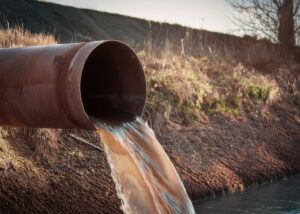
Glyphosate has wide-ranging negative effects on non-target plants, animals, and micro-organisms. The EPA has determined that glyphosate is “likely to adversely affect” 93% of the nation’s endangered species. The USGS has detected glyphosate (or its degradation product AMPA) in more than half of tested rivers and streams. The use of glyphosate is a central pillar in the heavily chemicalized monoculture crop system that devastates biodiversity throughout the Midwest.
A gift for Bayer
In 2025, Bayer indicated it might be forced to stop U.S. production of glyphosate in response to the multitude of lawsuits the company faces due to people getting sick from the chemical. The executive order conferring immunity appears to be the regulatory and legal answer that Bayer – a German multinational chemical company – was looking for.
Conclusion
Investigative journalists will parse the real motivation of this executive order. What is clear is that it mostly supports the current factory farming system, does almost nothing for food used directly by humans, does little for farmers who make slim profits on these crops (other than federal subsidies), addresses economic activities that are a tiny slice of the overall economy, and will continue to adversely affect nature, animals, and human health.